

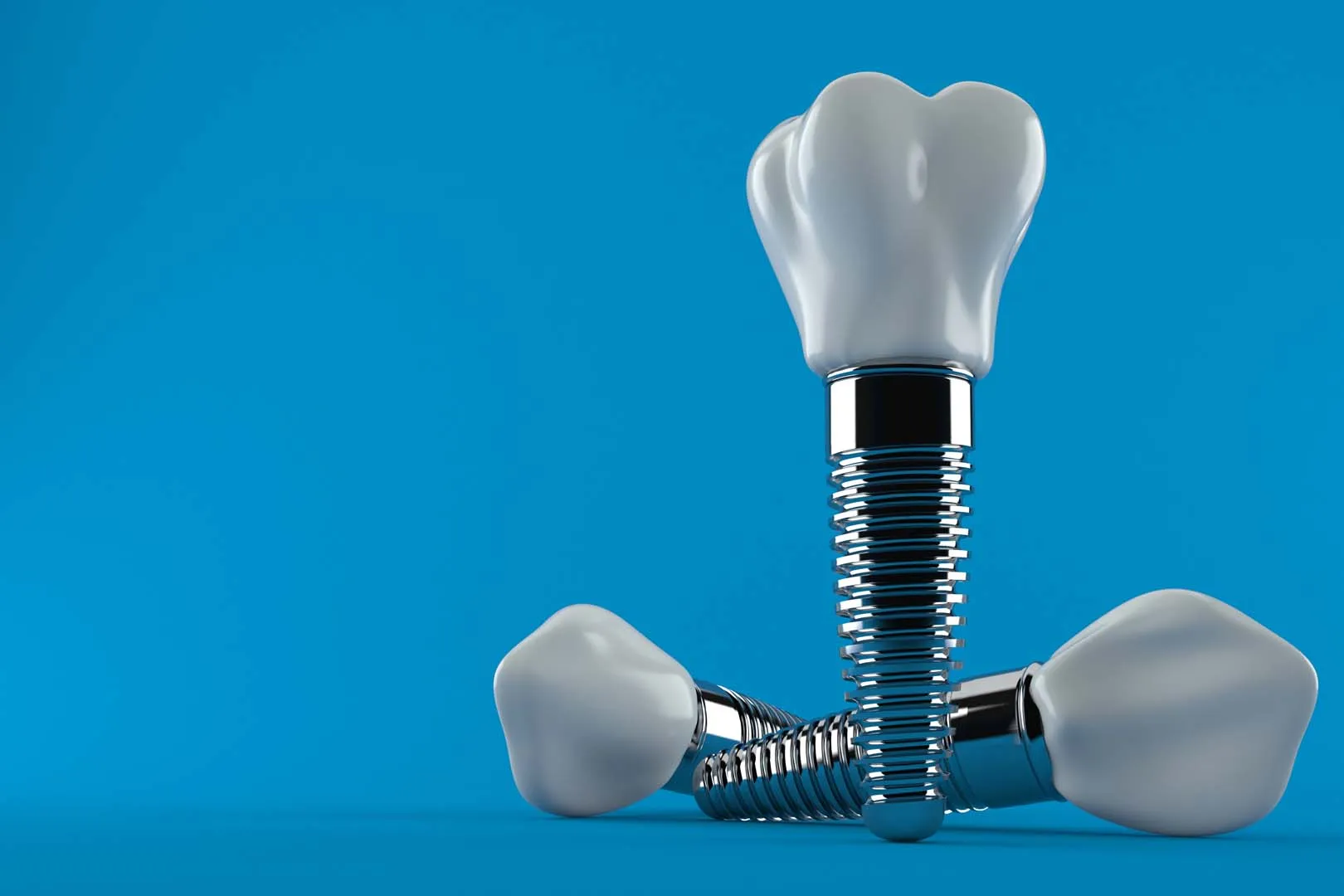
01. Why a Dental Implant Is the Gold Standard for a Missing Tooth
Dental implants have become the most recommended option for replacing a single missing tooth because they replace the entire tooth structure — both the visible crown and the root. This makes them different from other solutions like bridges or partial dentures.
What Makes an Implant-Supported Crown Different From a Bridge or Denture
The table below compares the three main options for replacing a single missing tooth. Each has its own pros and cons, but the implant stands out for its long-term health benefits.
| Feature | Single Tooth Implant | Dental Bridge | Partial Denture |
|---|---|---|---|
| Bone preservation | Preserves jawbone by stimulating natural bone growth | Does not prevent bone loss; bone may shrink over time | Does not prevent bone loss |
| Longevity | 10 to 15 years or longer with proper care | 5 to 10 years typically | 3 to 5 years on average |
| Adjacent tooth impact | No impact on healthy neighboring teeth | Requires filing down adjacent teeth for support | Clasps can wear on neighboring teeth over time |
| Maintenance | Brush and floss normally; no special cleaning | Requires special flossing under the bridge | Must remove for cleaning; can trap food |
| Cost range (single tooth) | Higher initial cost but often more cost-effective long-term | Moderate initial cost | Lower initial cost but needs frequent replacement |
As you can see, a single tooth implant offers the best long-term value because it protects your bone and leaves your other teeth untouched.
What Happens If You Leave a Missing Tooth Untreated
When a missing tooth is not replaced, the surrounding teeth can shift into the gap. This can cause bite problems, make cleaning harder, and increase your risk of decay and gum disease. More importantly, the jawbone under the missing tooth begins to shrink because it no longer receives stimulation from the tooth root. Over time, bone loss can make future implant placement more complicated. Replacing the tooth early with a single tooth implant helps you avoid these complications and keeps your smile healthy.
02. What to Expect: Your Single Tooth Implant Process at Riverwalk Dental
We make the process of getting a single tooth implant across Port St. Lucie, Saint Lucie West, Stuart, and Jupiter as straightforward and comfortable as possible. Here is what you can expect from start to finish.
Step 1 — Consultation and CT Imaging
Your first visit includes a thorough exam and a cone beam CT scan. This 3D image allows Dr. Gholami to see the exact shape and density of your jawbone, plan the ideal implant position, and check whether any bone grafting is needed before placement. We also discuss your goals, review your insurance benefits, and provide a clear cost estimate.
Step 2 — Implant Placement and Healing
During the implant placement procedure, Dr. Gholami surgically inserts a small titanium post into your jawbone. This post serves as the new tooth root. The procedure is done under local anesthesia, and we offer sedation options if you feel anxious. After placement, the implant needs time to fuse with the bone — a process called osseointegration. This typically takes three to four months. A temporary tooth may be placed to keep your smile looking natural during healing.
Step 3 — Your Custom Implant-Supported Crown
Once the implant has fully integrated, we take digital impressions and craft a custom crown that matches the shape, size, and color of your surrounding teeth. The crown is then securely attached to the implant. You leave with a fully functional, natural-looking tooth that feels just like the real thing.
03. Implant Dentistry at Riverwalk Dental Group — What Sets Us Apart
What makes our implant program different is the level of expertise you get under one roof. Dr. Laya Gholami is a double board-certified periodontist and implant surgeon with advanced training in bone augmentation and full-mouth rehabilitation. You do not need a referral to a specialist — Dr. Gholami handles the surgical phase, and our general dentists place the final restoration. This means fewer appointments and a more coordinated treatment plan.
We also offer sedation dentistry for patients who feel nervous about the procedure. And with locations across Port St. Lucie, Saint Lucie West, Stuart, and Jupiter, you can access care close to home. Our team speaks English and Spanish, so you can communicate comfortably in the language you prefer.
For patients who need to rebuild bone before implant placement, we provide bone grafting in-house. And if you need to replace multiple teeth, you may also be interested in our All-on-4 implant option.