
What Is the Average Lifespan of a Dental Crown?
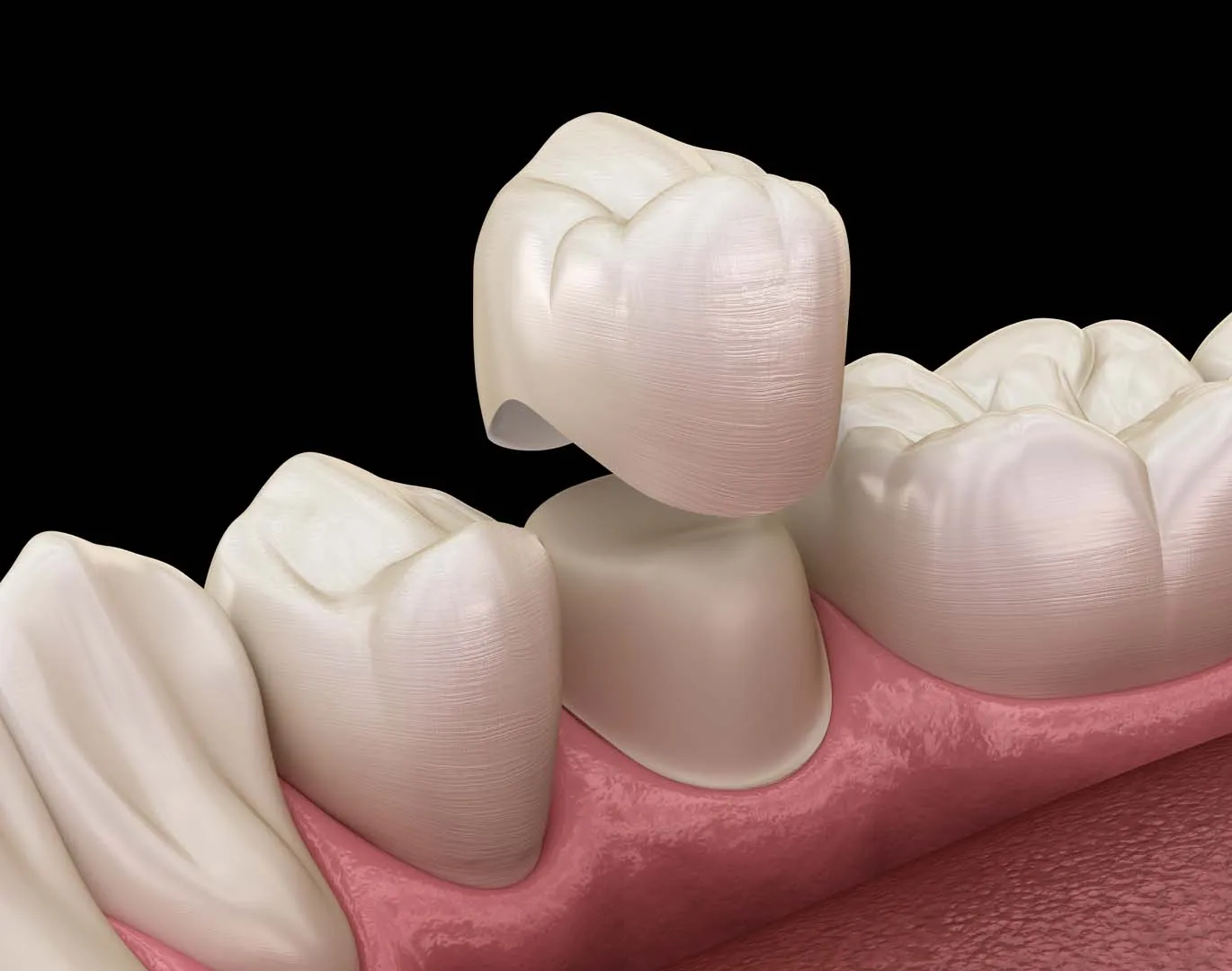
Most dental crowns last between 5 and 15 years, but with proper care and the right material choice, many patients enjoy their crowns for 20 years or more. Your Riverwalk dentist will evaluate your specific situation to give you a more personalized estimate. The key factors are the material used, your oral hygiene habits, and how well you care for your crown day to day.
How Crown Material Affects How Long It Lasts
Different crown materials have different strengths and weaknesses. Your choice will affect the dental crown lifespan as well as the look and feel of your restoration.
Porcelain vs. Zirconia vs. Metal Crowns — Durability Compared
| Feature | Porcelain | Zirconia | Metal |
|---|---|---|---|
| Average lifespan | 5–10 years | 10–15+ years | 15–20+ years |
| Durability | Moderate — prone to chipping or cracking under force | High — very strong and fracture-resistant | Highest — extremely strong, resists wear and fracture |
| Aesthetics | Excellent — natural tooth color and translucency | Good — tooth-colored but can appear opaque | Poor — metallic color, not suitable for visible teeth |
| Best use case | Front teeth where appearance matters most | Molars and premolars where strength is needed | Back teeth (molars) where strength is critical and appearance is less of a concern |
Porcelain crowns offer the most natural appearance, which is important for front teeth. Zirconia crowns combine strength with a tooth-like color, making them a popular choice for back teeth. Metal crowns (often gold alloy) are extremely durable but are almost always used on molars because of their color. Your dentist will help you choose the material that fits your needs and budget.
Factors That Affect How Durable Your Dental Crown Is
Your crown’s lifespan depends on more than just the material. Habits and the quality of your dental care play a big role.
Habits That Shorten Crown Life
- Grinding or clenching your teeth (bruxism) puts excessive force on the crown and can cause it to crack or wear down.
- Chewing hard objects like ice, pens, or popcorn kernels can chip or fracture the crown.
- Poor oral hygiene allows plaque to build up at the crown margin, leading to decay underneath or gum disease.
- Using your teeth as tools (opening packages, ripping tags) risks damaging the crown.
- Skipping dental checkups means small problems go unnoticed until the crown is compromised.
What Your Dentist Does to Help Crowns Last Longer
Your restorative dentist plays a crucial role in crown longevity. At Riverwalk Dental Group, our multi-specialty team takes careful impressions (often using digital scans) to ensure a precise fit. A well fitted crown has a tight seal that prevents bacteria from getting underneath. We also check your bite and adjust the crown so it meets opposing teeth evenly, reducing stress and wear. By including a periodontist and endodontists on our team, we can treat any underlying gum or root issues before placing the crown, which protects its foundation.
Dental Crown Care Tips to Maximize Longevity
Taking care of your crown is similar to caring for your natural teeth. Follow these dental crown care tips to help your crown last as long as possible:
- Brush twice daily with fluoride toothpaste and floss once a day. Use floss threaders or interdental brushes if your crown has tight contacts.
- Pay special attention to the gumline where the crown meets your tooth. Plaque tends to collect there.
- Use a mouthguard if you grind your teeth at night. We can create a custom guard that fits over your crown.
- Avoid chewing on ice, hard candy, or other hard objects.
- Visit us regularly for cleanings and exams. We will check the crown’s fit, look for signs of wear, and take X-rays as needed to check the tooth underneath.
- If the crown feels loose or uncomfortable, call us right away. Early intervention can often save the crown.
When Should You Replace a Dental Crown?
Crowns do not last forever. Even with perfect care, the cement seal can break down over time, or the tooth underneath may develop decay. Common signs that replacement is needed include:
- Chipping, cracking, or visible wear on the crown surface.
- Pain or sensitivity when chewing or to temperature changes.
- The crown feels loose or wiggles slightly.
- Dark lines appear at the gumline, which may indicate the cement has worn away or the metal underneath is showing.
- Food gets trapped around the crown, a sign the fit has changed.
If you notice any of these, schedule an exam. Replacing a failing crown early can prevent damage to the tooth underneath and save you more extensive treatment later. Across our offices across Port St. Lucie, Saint Lucie West, Stuart, and Jupiter, we have general dentists and specialists who can evaluate and replace crowns efficiently.